Hamad International Airport (DOH) – Main Terminal Complex

Hamad International Airport, Doha, Qatar
Project Overview
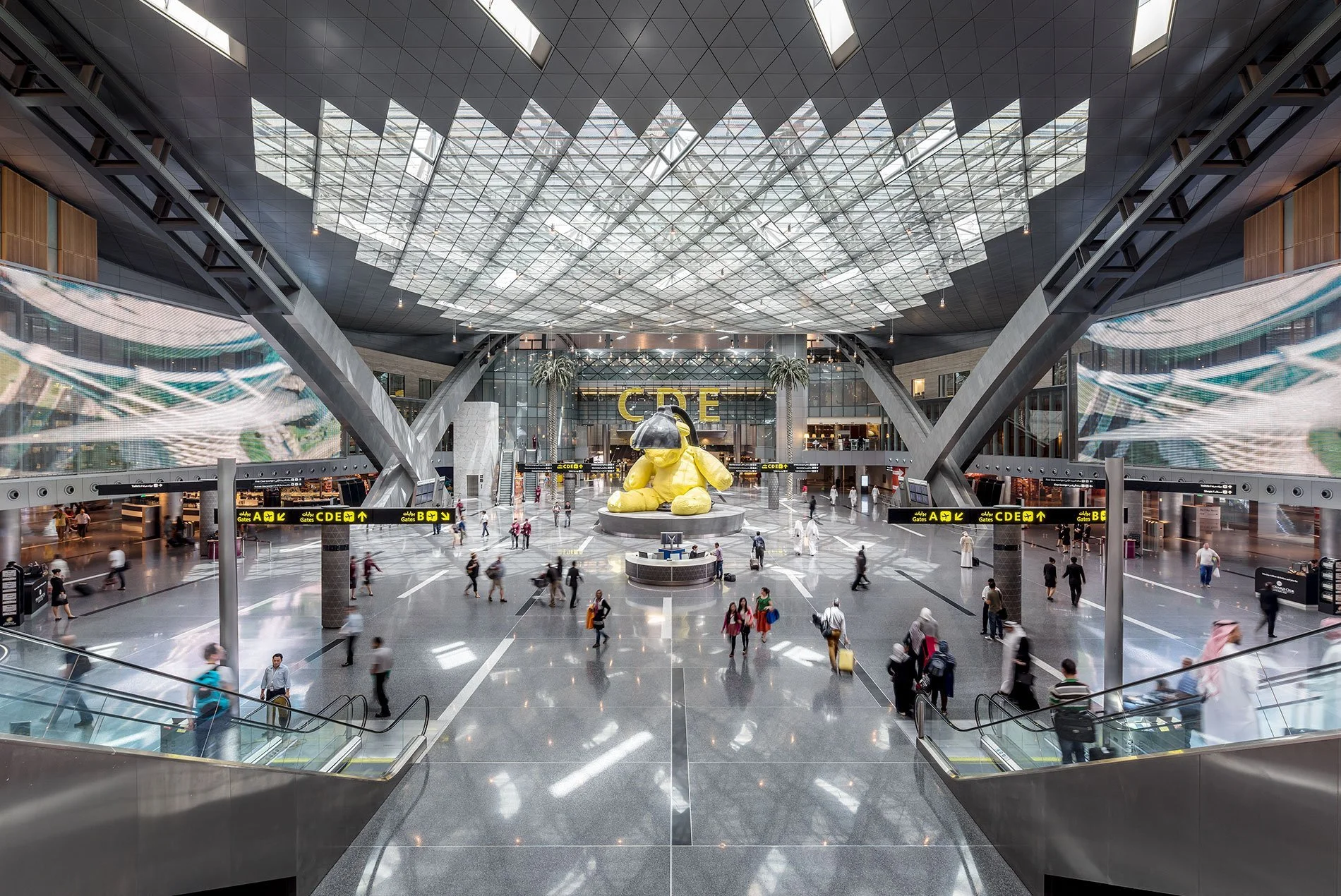
Hamad International Airport (HIA) is a world-class aviation hub in Doha, Qatar, consistently ranked among the best airports globally by Skytrax. The project includes a 6M SF main terminal complex, multiple concourses, and extensive landside and operational facilities, designed to serve as the primary hub for Qatar Airways.
The airport is recognized for its architectural quality, operational efficiency, and integration of advanced systems, setting a global benchmark for passenger experience and airport design.
Project Facts
Client: Qatar Civil Aviation Authority (New Doha Intl Airport Steering Committee)
Location: Doha, Qatar
Program: New international airport terminal (~6M SF)
Scope: Terminal complex, concourses, operations centers, landside facilities
Role: Project Architect → Team Lead (Post-Opening)
The Challenge
The project required delivering an extremely complex airport under conditions of continuous design evolution and high performance expectations:
Construction of a large-scale, high-profile international terminal with bespoke architectural requirements
Ongoing design changes and expansions during construction, including the North Node and concourse extensions, first and business class lounges, and other operational spaces
Integration of airport-wide special systems, security, and operational infrastructure within a highly refined architectural environment
Coordination with multiple stakeholders, contractors, and government authorities, including Civil Defence approvals
Balancing strict technical and code requirements with the client’s ambition to create one of the most beautiful airports in the world
The challenge extended beyond construction — it required ensuring the airport could successfully open and operate at a global standard.
My Role
As Project Architect, I was responsible for design coordination and construction administration across multiple critical packages within the terminal program.
My responsibilities included:
Managing design and delivery of conveyance systems, passenger boarding bridges, and multiple terminal packages
Leading the airport-wide special systems integration effort, coordinating technology, security, and architectural elements
Acting as a key liaison during Civil Defence inspections and approvals, ensuring compliance with life safety requirements
Supporting delivery of major expansion components, including the North Node and concourse extensions (D & E)
Following the airport’s opening, I was appointed Team Lead for the on-site design team, overseeing ongoing design support, operational adaptations, and additional project scopes.
Key Contributions
Led integration of airport-wide special systems
Managed the coordination and architectural integration of complex systems including security, communications, and passenger technologies within a highly controlled design environment.Enabled successful regulatory approvals and opening
Played a critical role in Civil Defence inspections, providing technical responses and coordination that supported project approval and operational readiness.Delivered multiple complex construction packages
Managed design and construction administration for concourse expansions, operations centers (12 total), and various terminal systems.Bridged design intent and technical execution
Ensured that advanced systems and infrastructure were seamlessly integrated into the architectural vision without compromising performance or aesthetics.Led post-opening design operations team
Directed a multidisciplinary team supporting ongoing airport operations, resolving issues, and implementing additional design scopes after opening.
Outcome
Hamad International Airport successfully opened as a globally recognized benchmark for airport design and performance, achieving:
Industry-leading passenger experience and architectural quality
Seamless integration of complex operational and technology systems
Long-term adaptability through coordinated infrastructure and system design
The project demonstrated the ability to deliver highly complex aviation infrastructure at a global standard, from construction through operational launch and beyond.